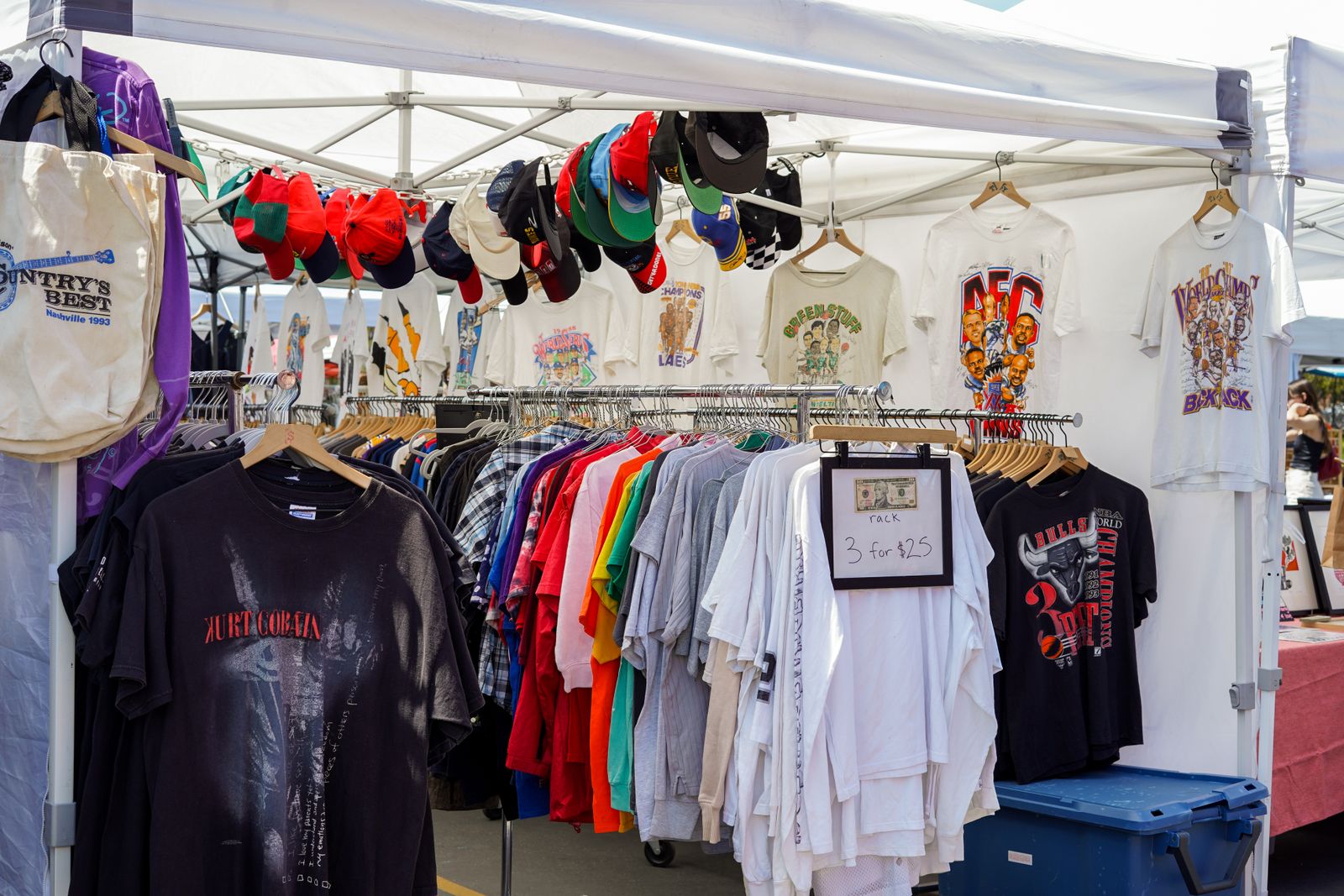
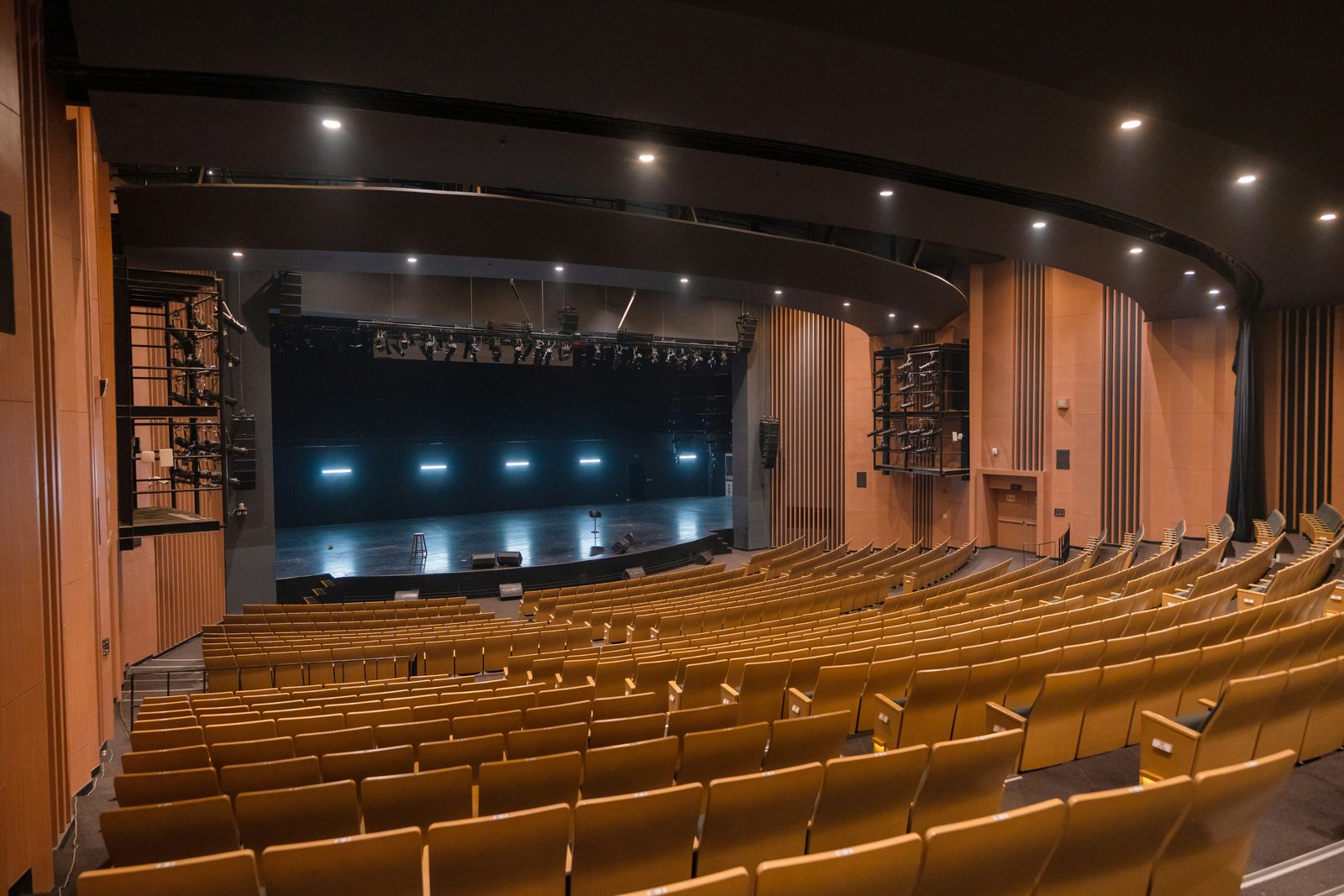
For most of the history of touring, everything a concert sold beyond the ticket, it was sold inside the building. The shirt, the beer, the tour book on the merchandise table. Whatever else happened that night left the venue in someone’s memory, or on a cassette hidden inside a jacket.
Today the same show can also sell the recording of itself, a livestream to people who were never in the room, a digital pass, a collectible attached to a seat. None of it takes up floor space, and none of it has to be physically manufactured, shipped or restocked. In the revenue per attendee model I use to break down what a live event actually earns, this is the fifth layer, the digital add-ons, sitting after ticketing, VIP, merchandising and food and beverage.
The usual explanation for why it appeared is that technology made it possible. That is true, and it explains how the layer could exist, but not why anyone decided to build it. Technology has made a great many things possible that nobody ever bothered to sell.
This is a look at the economics behind the layer: what pushed the business to build it, where each of its products came from, what it actually sells today, where the money ends up, and what still holds it back.
What are digital add-ons in live music?
Digital add-ons are the fifth revenue layer in a revenue per attendee model: what a live event earns beyond the ticket, VIP packages, merchandise and food. They can include official recordings of each show, paid livestreams, digital collectibles and token-gated access.
The main reason they appeared is that recorded music stopped working as an income line for most artists, so touring had to sell more than a seat. They also behave unlike the other layers: they take up no floor space, hold no inventory, and cost almost nothing to deliver once the first copy exists. That is what makes the layer attractive. The difficulties sit elsewhere, in rights and in operations.
When recorded music stopped paying most artists
The story most people tell about the record business is a collapse followed by a rescue: Napster, the fall of the CD, and then streaming arriving to put the industry back on its feet. The aggregate numbers support the second half of it. Global recorded music revenue has now grown for eleven consecutive years and reached $31.7 billion in 2025. Adjusted for inflation it is still below where it stood in 1999, but the direction has been up for a decade.
What that story leaves out is who the money reaches. In 1999 the industry sold a physical object to a customer, and a few thousand signed artists shared the proceeds. Today the same industry pays fractions of a cent per play into a catalog that roughly 13 million people have uploaded something to. Revenue recovered. The number of artists sharing it grew by orders of magnitude.
Spotify publishes the distribution once a year, and it is the clearest picture available of how that money spreads.
Spotify Loud & Clear, 2025 figures. Percentages are calculated against roughly 13 million uploaders and are approximate. These are royalties generated on Spotify alone, before anything is split with labels, distributors or collaborators, so what an artist receives is lower. Reaching $10,000 takes something in the order of 2.5 million plays.
Radio has never closed that gap either, at least not for performers. In the United States, AM and FM stations pay the songwriters of a track and pay nothing at all to the performers or the label, an exception among the major markets that SoundExchange puts at around $200 million a year in uncollected royalties.
This is the part that matters for a touring business. For most artists, recorded music no longer works as an income line. An artist who once expected records to pay and touring to promote them now works the other way around: the room pays, and the recording is what brings people to the room. Once that inverts, everything sold around the show stops being a souvenir operation and becomes the business.
Three origins: bootleg, broadcast and memorabilia
New products tend to appear where a need has already opened and the existing ways of covering it no longer do the job. That is the reasoning behind the Back & Forth Methodology© I use to analyze why something new emerges, and it applies here. The digital layer does not come from a single place. Three separate things had already shown there was demand, decades before any of it could be delivered as a file.
Where each product comes from
The bootleg
Showed that one specific night had value, in poor audio and with nothing reaching the artist.
→ Per-show recordings
Broadcast and pay-per-view
Showed that a show could be sold to an audience that was never in the room.
→ Livestreams
Memorabilia and the fan club
Showed that proof of belonging and privileged access are worth paying for.
→ Digital collectibles and access rights
The first is the bootleg. Audience recordings circulated through tape trading long before any of it was legal or organized, and some bands accepted it openly. The Grateful Dead went as far as setting aside a section of the venue for tapers, sanctioned in 1984 and limited to noncommercial recording. What that proved is narrower and more useful than it looks. The songs were already available on record, so what people went to considerable trouble for was one particular evening. No money reached the artist, which is what makes it clean evidence: the demand was real enough to survive bad audio and no commercial support.
The second is broadcast. Radio concert series and televised specials established that a show could reach an audience that was never in the room, and pay-per-view later put a price on that directly. This lineage is about reach. The buyer is someone who could not attend, and what is being sold is access to the event while it happens.
The third is memorabilia and the fan club. The program, the laminate, the numbered item, the membership that unlocked the presale. This lineage is about proof of belonging and privileged access, and it is the one that digital collectibles and token-gated sales inherited, whatever the technology of the moment.
Against all three, the only sanctioned product the industry offered for decades was the live album. One record per tour at best, curated, mixed and released as the definitive version of that run. It covered the second lineage reasonably well and the third in part. The first it never covered, because a tour album is never the night you attended. Closing that gap was uneconomic while every copy had to be manufactured and shipped.
Capture and distribution: what actually got cheap
Closing that gap needed two separate costs to fall. One was making the recording. The other was getting it to the buyer. For most of the twentieth century both were high enough that recording every night of a tour made no commercial sense, however much anyone wanted it.
Capture went first. A live show is already being mixed while it happens, at the front of house desk, because that mix is what the audience is hearing. Recording it is close to trivial: the signal exists and only has to be routed to a recorder. That is a different product from the multitrack recording a live album is made from.
The desk feed is what a soundboard recording is. Both products coexist because they answer different questions: one documents a particular evening, the other is made as a record.
Distribution went next, and went further. A file has no manufacturing run, no shipping, no warehouse, no unsold stock and no shelf space to compete for inside the venue, so the cost of putting one more show on sale fell to storage, bandwidth and the handling of the file itself. Direct-to-fan platforms then removed the retail chain, and specialized ones appeared for exactly this product. That is the point at which a per-show recording became a catalog instead of an occasional release.
The copy became cheap. Running the operation across a whole tour is still a decision: every night has to be wired for capture, and the files have to be kept, checked and published on a schedule while the crew is already moving to the next city. That is the reason many artists still release one live album per tour and nothing else.
The digital products a tour can sell today
Every product below traces back to one of those three origins, and several of them share the same one.
1. Per-show recording
The established model runs through specialized platforms, of which nugs.net is the clearest case: it sells the audio of individual concerts by Pearl Jam, Phish, Dead & Company and others, in formats that run from a compressed download to high resolution, at prices that scale with the format and with the length of the show. What is on sale varies by artist. Phish’s official releases come from soundboard masters, and the more recent ones blend the desk feed with audience sources.
Pearl Jam’s tour engineers record every show in Pro Tools, two-track with a multitrack running alongside it, and put out professionally mastered versions within days. The cheap end is what makes publishing a whole tour viable. The mixed end is what a band chooses when a particular night is meant to sound like a record.
2. Livestream
It sells the show to an audience that could not be in the room, and it has tended to appear as a one-off on selected dates rather than as a permanent line on every tour. What has changed is how it gets paid for: a sponsor or a platform now covers most of them, or they arrive inside a subscription.
3. Archive subscription
Selling the archive rather than the night is a different product with the same catalog behind it. The platforms that sell a single show also sell access to everything an artist has published, by the month or by the year. What that changes for the business comes further down.
4. Access rights
A token that unlocks a presale, a pass that carries a membership, a credential that proves you were in the room. This is the part of the layer that has held up best, and it has drifted from the artist toward the platforms, which I come back to further down.
5. Digital collectible
A digital item tied to a seat, a date or a release. This is the part of the layer with the shortest track record and the most noise around it, and it deserves its own section further down.
6. Bundled digital
This is not a separate product in commercial terms. It is the same content folded into a VIP tier or handed to whoever holds a ticket. Dead & Company have given the soundboard recording of a show to ticket holders who scan their ticket, while still selling that same night in better formats. Packaged that way, digital disappears from the storefront without disappearing from the accounts, which is a measurement problem I come back to.
Digital add-ons: the fifth layer
The main digital products that can sit inside it. Any of them can be absent from a given tour.
Per-show recording
The audio of one specific night, from a desk feed to a full mix.
~$10 to $25
Livestream
The show as it happens, for an audience that could not be in the room.
Sponsored, or inside a subscription
Archive subscription
Access to a catalog of past shows rather than to a single night.
Monthly or yearly
Access rights
Presale rights, membership and proof of attendance, increasingly token-gated.
Usually inside a membership, sometimes sold
Digital collectible
An item tied to a seat, a date or a release.
Varies
Bundled digital
The same content folded into a VIP tier or handed to whoever holds a ticket.
No separate price
Prices are approximate and refer to the US market. Per-show pricing varies by format and by the length of the show, which matters for artists whose sets run long. Selling a livestream by the event still works where an artist has a global fanbase and a platform of its own, which in practice has meant K-pop.
Why a fan buys their own night
At first look the product is redundant. The songs are already on record, a tour album will probably exist, and anyone who wants to hear the band can do it for the price of a subscription. What the buyer is paying for is the fact of having been there, in a form that can be played again.
The bootleg had already settled that question. The value does not depend on the night being unrepeatable. Where a tour rotates its setlists that adds something, and where it does not, the recording still sells, because what the buyer wants is the specific evening they attended.
There is also a quality argument, and it runs in the artist’s favor. Audience recordings of any large show circulate anyway, in whatever state a phone or a hidden recorder can manage. An official desk recording is simply better than the free version already in the room. Selling it captures demand that exists whether or not anyone monetizes it.
The impulse is the same one that sells a tour shirt with the dates printed on the back, which I looked at in the economics of concert merchandising: proof of presence, in an object. Vinyl makes the same point from another direction. It has grown for nineteen consecutive years while the music pressed on it streams for free, which says something about what people will pay for when the content itself costs nothing.
Commercially this matters because the demand is concentrated in the part of the audience that already spends the most. That is why the product can work at volumes which would be unviable for anything that has to be manufactured, and it is also why it belongs in a revenue per attendee model rather than in a catalog strategy.
Margin and mechanicals: where the money ends up
On paper this is the best layer in the model. There is no manufacturing run, no stock to write off, no floor space to rent and no venue commission, which is what separates it from merchandise, where many buildings keep a share of gross sales before anything reaches the artist. Once the recording exists, delivering one more copy costs about what the file costs to store and move.
What a download owes
The bill arrives somewhere else. Every download distributed owes a statutory mechanical royalty to the songwriters and publishers of every track on it. In the United States that bill is unusually large for live music, because the rate charges long tracks by the clock.
How the publishing bill works
The rule
The rate
In the United States, every track on the recording owes a royalty on every copy. Nothing is exempt. A track of ordinary length owes a flat 13.1 cents. Once a track passes five minutes it is charged by the clock instead, at 2.52 cents a minute, and the clock runs over the whole track, not only over the part above five minutes.
What triggers it
The royalty is owed on every copy distributed, not every copy sold. A copy given away inside a VIP package owes exactly the same as one bought in a store.
Who collects it
The songwriters and publishers of every track on the recording. It is separate from the platform’s commission and from whatever the artist earns on the master.
What one track costs
Playing time is rounded up to the next whole minute, which is why one second past five minutes jumps a track to six minutes of clock.
What one show costs
A long two-set show, once the intermission is stripped out, runs to roughly 150 minutes of music. If most of the set passes five minutes, which is normal for bands with long-form material, nearly all of it is charged by the clock.
$3.80 per copy
On a download priced between $13 and $15, that is roughly a quarter of the price, owed on every copy handed over, whether or not anyone paid for it.
A lower end illustration. The bill is calculated track by track, and each track rounds up separately, so the real figure can be higher. A show with short tracks costs more, not less, because a track under five minutes pays the flat 13.1 cents, which works out higher per minute than the clock rate.
What access owes instead
That arithmetic only applies to a file, and a large part of this layer is not a file. A code that unlocks the audio of your night, a livestream, a subscription to an archive: all of it is access, and access is licensed differently. In the United States an interactive streaming service owes songwriters and publishers an all-in 15.3% of its revenue in 2026, rising to 15.35% in 2027, with floors tied to subscribers and to content costs. There is no per-copy amount and no clock.
The difference decides how the layer is delivered. A download carries a fixed cost on every copy, it rises with the length of the show, and it is owed even when the copy is given away. Access carries a cost that moves with what the service earns and does not care how long the show ran. That is why a giveaway is usually access rather than a file: what Dead & Company hand to a ticket holder is a stream, and handing over the download instead would owe the publishing bill on every single one.
Why bundling does not remove the cost
The obligation also follows every copy that is distributed, not only the ones that are sold. A download folded into a VIP package is still a copy, so the royalty is still owed on it. Bundling does not remove that cost. It moves it, because the buyer never pays for the download separately and it comes out of the package price instead.
Who owns the recording
What is left then moves down a line. The owner of the master collects the sale and pays the artist whatever the contract sets as a royalty. The publisher collects the mechanical separately. The platform takes its commission. Depending on how a catalog was sold in the past, the writers’ share may reach the band directly or may sit with whoever bought it. In the traditional version of the sequence, the artist is at the end of it.
Which brings up the constraint that decides most cases. Whether an artist can run this at all is a question of who owns the recordings. The cost is rarely the obstacle. If the masters sit with a label or a rights holder, the decision to open a per-show program belongs to that owner, and a band can want the product without being the party able to launch it.
The result is a layer with a real margin at the level of the sector and a much thinner one at the level of the band, where what usually decides whether it exists at all is ownership.
Bundling: why the layer disappears from the storefront
The layer does not always sell on its own. Increasingly it arrives inside a package. Metallica’s Sphere residency folds an MP3 download of the live audio into almost every VIP tier, from a $525 reserved seat to a $5,500 package with a meet and greet, alongside a limited edition drinkware item. Dead & Company give the soundboard recording of the night to anyone who scans their ticket, and then sell that same night in better formats to whoever wants to own it. In one case the recording is paid for inside a package. In the other it is given away to pull the buyer into a store. Neither registers as a digital sale.
There is a straightforward reason to package it that way. Because the marginal cost is close to nothing, a download is an efficient thing to add to a premium tier: it raises what the buyer perceives they are getting, at a cost the promoter barely notices, and it helps justify a price step that a laminate and a lanyard would not carry on their own. It also removes a second purchase decision, which is where most add-on sales are lost.
The consequence is a measurement problem. Counted at the storefront, that download registers as nothing, even though the money was paid. It sits inside the VIP line instead. Anyone assessing how much a tour earns from digital by looking at a separate store will undercount it, and the more sophisticated the packaging, the larger the gap between what the layer earns and what it appears to earn.
The practical rule when reading a tour is to check what the packages contain rather than what the store lists. That also protects the opposite conclusion, which is sometimes the correct one. In the case study of Rush’s tour I went through the four VIP tiers and the travel packages one by one, and found no download, no stream and no digital collectible anywhere in them, alongside nothing sold separately. The layer really was at zero, and knowing that required reading one level below the shop window.
What scales: catalog, subscription and the top of the fanbase
Four separate mechanisms make this layer grow, and an artist can run any of them without the others.
What makes the layer grow
A catalog that keeps growing
A recorded night does not expire and occupies nothing. Every tour adds permanently to what an artist can sell.
Subscription instead of one-off sales
A catalog subscription turns single purchases into recurring revenue. Veeps, owned by Live Nation, moved from pay-per-view to a monthly subscription in 2023, now priced at $19.99.
Pricing for the top of the audience
High resolution, an early window, an archive tier. None of them costs more to deliver than the basic file.
Reach beyond the cities on the tour
Merchandise is limited by what fits in a truck and by what one city buys on one night. A file carries neither limit.
The first of those matters most, because it works in the years when nothing else does. Touring runs in cycles, and in the years without a tour an artist has no ticket, no merchandise stand and no room. Those are precisely the years when recorded income is supposed to carry them, and for most artists it does not. An archive of shows sells in exactly those gaps.
Attempts that did not hold
Three products in this layer have been tried at scale and are no longer part of it. Each one failed for a different reason, and between them they mark the limits of what the layer can carry.
The CD at the door
The first was the physical copy handed over as the audience left. From 2003, Clear Channel’s Instant Live and DiscLive burned the concert to CD on site and sold it at the exit, and Aderra put the same thing on a USB wristband. Clear Channel then bought the patent behind the idea and claimed the exclusive right to sell concert recordings on site, not only across its own 130 venues but across every other American one, and told the Pixies that DiscLive could not operate at their shows. A few years later Live Nation dropped the product itself.
It failed on two fronts at once. Every copy had to be manufactured that night, on site, with machines, staff and a queue, so the cost of one more copy never approached zero. And the thing it sold was a carrier: the audio of that night, on a disc. Across those same years the carrier was losing its purpose, first to file sharing and then to paid downloads, and an object whose only job was to move audio stopped being worth paying for.
Vinyl and the tour shirt survived that shift because they do something besides carry audio. The disc at the exit did not. Once the same recording could be delivered as a file a few days later at no cost per copy, there was nothing left for it to do.
The paid livestream
The second was the livestream sold by the event. It was a real business for about two years, during the pandemic, when venues were shut and there was no other way to see a show. Mandolin launched in 2020, raised more than $17 million and ceased operations in April 2023, after a year spent trying to raise more money and failing. Moment raised $13.5 million and was absorbed by Patreon in October 2023, where its technology now runs ticketed livestreams for creators. Both had been built for a market that contracted sharply when the rooms reopened.
What replaced it is not a cheaper livestream. It’s a different transaction. The stream is now given away and paid for by a sponsor or a platform, as Coachella does on YouTube and Primavera Sound has done with Amazon since 2022, or it is folded into a subscription, as Veeps did when it launched All Access in 2023, now priced at $19.99 a month. Selling a single stream by the event still works where an artist has a global fanbase and a platform of its own, which in practice has meant K-pop.
The collectible
Of the three origins, memorabilia is the one digital has reproduced worst, and the attempt is recent enough to be instructive.
Between 2021 and 2022 a large amount of money went into music NFTs on a simple pitch: artists would be paid directly and would keep a share of every resale. In March 2021 Kings of Leon released an album that way, and weeks earlier the producer 3LAU had raised more than $11 million in under a day.
Two details are worth holding on to. What survived the Kings of Leon release was the part with a use attached. What failed at Coachella was also access, and it failed anyway, because a real entitlement stored on an exchange stops working when the exchange does.
Underneath both sits the weakness of the format. What the buyer held was worth something because somebody else was expected to want it later, so once the queue of later buyers stopped forming, the item had nothing left to do. The wider problem is not specific to music: for an ordinary buyer the technology still asks for wallets, seed phrases and custody decisions, which is why Web3 adoption stalled.
The recording never carried that dependency. Its value is in playing it. A fan who buys the night they attended is not waiting for a second buyer, and the price they paid needs nobody else to validate it.
What survived from that period is the access function, and it has ended up with the platforms rather than the bands. In June 2026 Spotify launched Reserved by Spotify, which holds two tickets of a tour for an artist’s most dedicated listeners before the general sale opens, decided by their streams, saves and shares, and executed by Ticketmaster under a multi-year agreement with Live Nation. The token disappeared. The idea it was carrying, that a committed fan should get first claim on the room, is now a feature of a streaming subscription.
The three failures do not share a cause. The CD at the door died of manufacturing cost. The paid livestream lost its mass market when the audience could go back to the venue. The collectible died because its price depended on a second buyer. What is left in the layer is what costs almost nothing to deliver, does not compete with the room, and is worth something to the person holding it without anyone else having to want it. That is the test the next version of the idea will have to pass.
That sets the honest limit on how far this layer accelerates. Growth has come from the parts that do something for the buyer. The parts that needed a resale market to hold their price have not delivered it, and there is little reason to expect the next version of the idea to behave differently unless it arrives with a “use” attached.
What endurance sport already sells and live music does not
One product in this family is already running at scale, and not in music. FinisherPix has photographed more than 4.5 million runners, triathletes and cyclists across 3,000 events in more than 50 countries, and delivers each participant a personal gallery within 48 hours of the finish.
What matters here is not the photography. It is the contract. When an event lets FinisherPix sell photos to its participants, FinisherPix pays the event a guaranteed rate per finisher, or a commission on the packages sold. That is a digital add-on priced per attendee, agreed in advance, in a market far smaller than live music.
Nothing sold at a concert works that way at anything like the same scale. The reason usually given is that a race is easy to photograph and a dark room is not, which is true and incomplete. A race can do this because every participant carries a number and passes fixed points at a known time, so the footage can be matched to a person. A ticketed concert holds the same information: a seat, a scan, a time. Dead & Company already use the ticket scan to deliver audio. The pieces are in production separately, and nobody has connected them.
Companion resource
Digital Live Atlas
Every digital product sold around concerts and sporting events, with what it sells, what it earned and whether it is still running.
132 cases · Music and sport · A source for each · Cut-off September 2026
What this means for revenue per attendee
One convention matters as soon as this layer stops being zero. Revenue per attendee is read per attendee, not per buyer. Every layer is an average across the full house, so the digital layer is divided by total attendance and not by the people who bought a download. A show where one attendee in twenty buys a $15 recording adds around $0.75 per attendee. That is the figure that belongs in the model.
Put back into the model, this layer behaves unlike the other four. Ticketing, VIP, merchandising and food and beverage are all consumed by the person in the room, on the night, and all of them stop earning when the show ends. The digital layer keeps earning afterwards, reaches people who were never there, and carries a cost structure that has almost nothing in common with the other four.
That makes it the easiest layer to estimate badly, in both directions. Read at the storefront it looks like zero when it is not. Read as a digital product it looks like pure margin when it is not. Anyone modeling a tour needs three checks before putting a number on it.
Reading the digital layer on a tour
1. Read the packages
Check what every VIP tier and travel package contains, not only what the store lists. Bundled digital is paid for and invisible.
2. Check who owns the tapes
An artist who does not control the recordings cannot open this layer, however cheap it would be to run.
3. Subtract the publishing bill
Mechanical royalties are owed on every copy, free ones included, and on long shows they take a quarter or more of the price.
The third check is the one most often skipped, and the second is the one that decides whether the layer exists at all. A band can have the audience, the demand and a tour worth recording, and still not be the party entitled to sell it. None of that tells a tour whether to bother. Three conditions make the layer viable:
- Control of the recordings, because without it the layer cannot exist at any price.
- An audience that repeats, since the buyer of a specific night is usually someone who goes to more than one.
- A run long enough that the catalog is worth browsing between tours.
The order of magnitude is modest, and worth saying plainly. On the arithmetic above, the layer adds well under a dollar per attendee, which is negligible next to a ticket and a real number across a hundred nights and a catalog that keeps selling for a decade. There is also a tension worth naming: the bands with the most committed audiences tend to play the longest shows, which is exactly where the publishing bill is heaviest.
Underneath all of it sits the reason the layer was built. Recorded music came back as an industry and did not come back as an income line for the people making it, so the money had to be found around the show instead of after it. That is why the digital layer belongs in a live model rather than in a record company’s accounts, and why it should be read next to merchandising and VIP rather than next to streaming.
For an artist who tours, the question is no longer only how many tickets were sold and at what price. It is what else that night can be sold as, to whom, and for how long after the lights come up.
Frequently asked questions
Why do artists sell recordings of their own concerts?
Because recorded music stopped working as an income line for most artists. Streaming pays fractions of a cent per play into a catalog that around 13 million people have uploaded to, so the money has to be found around the show. A recording of a specific night sells to the people who were there, at a price no stream reaches.
How much does an official concert recording cost?
Roughly $10 to $25, depending on the format and the length of the show. A compressed download sits at the low end, lossless in the middle and high resolution at the top. Long sets cost more, because the price scales with running time.
What happened to paid concert livestreams?
They were built for a market that closed. Selling a stream by the event worked while venues were shut, and it stopped working when the audience could go back. Mandolin raised more than $17 million and ceased operations in April 2023, and Moment was acquired by Patreon in October 2023. The stream is now given away and paid for by a sponsor, as Coachella does on YouTube, or folded into a subscription, as Veeps did when it launched All Access in 2023.
Is a soundboard recording the same as a live album?
No. A soundboard recording is the mix the audience heard, taken from the desk and lightly mastered, and it varies from night to night. A live album is captured on multitrack and mixed afterwards in a studio. The first documents a particular evening. The second is made as a record.
Who keeps the money from a concert download?
Not the artist alone. Every copy distributed owes a statutory mechanical royalty to songwriters and publishers, free copies included, which on a long show can take a quarter or more of the price. The owner of the master collects the sale and pays the artist whatever the contract sets, the publisher collects separately, and the platform takes a commission.
Why did music NFTs fail?
Because their value depended on resale. NFT trading volume peaked at $57.2 billion in 2022 and fell to $16.8 billion the following year, and the art segment is down about 93% from its 2021 peak. Even access failed when it was wrapped in a token: Coachella sold ten lifetime passes for $1.5 million and they became unreachable when FTX went bankrupt. What survived is the idea underneath, and it moved to the platforms. Reserved by Spotify now holds tour tickets for an artist’s most dedicated listeners before the general sale opens.
Note on sources. Artist earnings and catalog size come from Spotify’s Loud & Clear data for 2025 and describe that platform only. The percentages shown are calculated against roughly 13 million uploaders and are approximate, and the play count needed to reach $10,000 rests on an estimated per-stream rate, because Spotify does not publish one. Global recorded music revenue and physical format trends are from IFPI. Comparisons with 1999 in real terms use US industry data and are labeled as such, because the series are not directly comparable across markets or across time. Per-show recording prices, formats and publication windows are taken from nugs.net and describe the US market. The mechanical royalty rate for downloads is the US statutory rate for 2026; outside the United States mechanicals are settled through collecting societies as a share of price. The rate for interactive streaming is the US all-in headline rate set under Phonorecords IV. The publishing figure for a long show is an approximation based on running time and sits at the cheaper end, and the per attendee example in the closing section is illustrative. NFT trading volumes are from market trackers. The Kings of Leon and 3LAU figures, the Coachella lifetime passes and their status after the FTX bankruptcy, the funding and closure of Mandolin, the acquisition of Moment by Patreon, and the history of Instant Live, DiscLive and Aderra including the patent claim, all come from press reporting. Reserved by Spotify is described from the announcements published by Spotify and Live Nation. The contents of the Metallica and Dead & Company programs, the Veeps subscription price and the FinisherPix figures come from those companies’ own published information. Taper culture and early bootleg trading are described from documented industry history. The wider catalog behind several of these cases, with the status and source of each, is published separately as the Digital Live Atlas. The US radio royalty gap is as described by SoundExchange. Header photo by Claudio Schwarz on Unsplash.
© 2026 Oriol Guitart. This article and its analysis were written by Oriol Guitart. All rights reserved for the full term and scope established under Intellectual Property Law. Any total or partial reproduction, distribution, public communication and/or transformation is strictly prohibited without the author’s prior express written consent, and in any event the author must be acknowledged as such in any subsequent use.