1000 Ways to Be a Manager

1000 Ways to Be a Manager

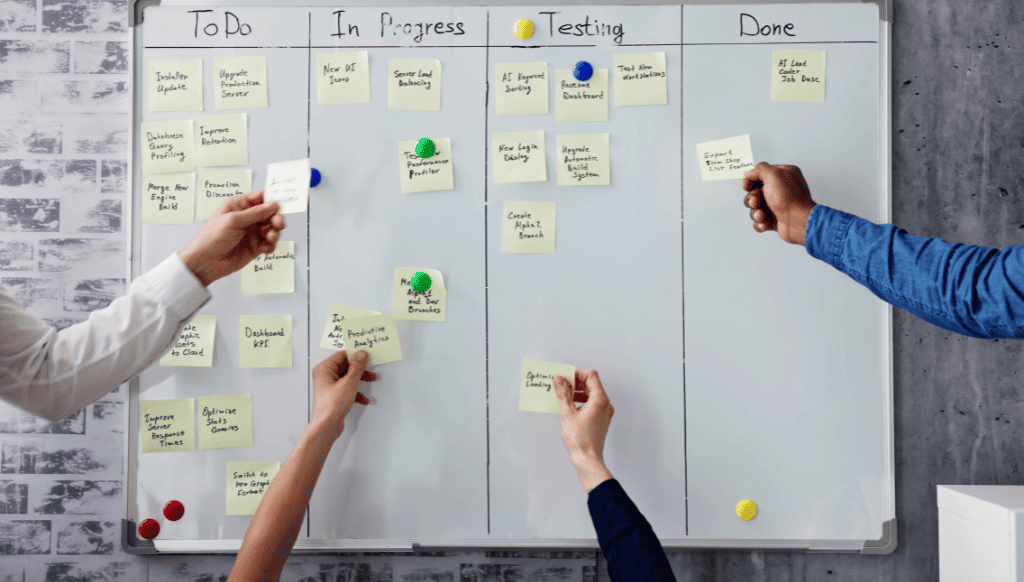
There is no single model of management or universal leadership style. Managing teams means balancing expectations, making decisions with incomplete information, and combining technical skills with human judgment. In reality, there are as many ways to manage as there are contexts, organizations, and people. Perhaps that is why, in practice, there are a thousand ways to be a manager.

Authenticity in the Age of Digital Layers

Authenticity in the Age of Digital Layers

Yesterday, I was watching Weather Report at Montreux 1976: sweat, improvisation, and total coordination—no Photoshop, no Auto-Tune. Authenticity was inevitable. Translating that scene to the corporate world, the same principle applies: technology can embellish the form, but only true mastery—both individual and collective—can sustain decisions, documents, and meetings when the tools fail. The real advantage lies in the ability to act with competence, far beyond the stagecraft.

From SWOT to CAME Strategy Managing Probability and Criticality

From SWOT to CAME Strategy: Managing Probability and Criticality

Strategy cannot be limited to describing the present through a static SWOT; it must anticipate scenarios and prioritize them with sound judgment. By weighting threats and opportunities according to their probability and impact, the analysis becomes a genuine decision-making tool. CAME then translates that diagnosis into action, turning strategic reflection into competitive advantage.

Los detalles que importan

Details that matter

Executive time is limited, which forces us to be extremely selective about the details we bring into the conversation: it’s not about sharing anecdotes, but about using concrete examples to reveal systemic problems. A CEO does not manage isolated cases, but the inefficiencies that create them — and that’s where connecting the specific to the broader picture turns a detail into decision-useful information.

Ingresos pasivos 1

Passive Income: The Myth of Effortless Money

So-called passive income is rarely passive in the strictest sense. Behind every automated stream lies a significant investment in design, knowledge, and upfront architecture that allows operational work to be decoupled from recurring revenue. The problem isn’t the model itself, but the mindset the term creates: it can trivialize the effort involved and build unrealistic expectations.

Decisiones comodas consecuencias costosas 1

Comfortable decisions, costly consequences

An executive does not decide only when they act: they also decide when they postpone or avoid necessary changes. True leadership demands balancing the short term with future sustainability, even when doing so involves personal friction. Prioritizing comfort or one’s own professional horizon may be understandable, but it puts the organization’s medium- and long-term outlook at risk.

Allowing Ourselves to Make Mistakes Post

Allowing Ourselves to Make Mistakes

Allowing ourselves to make mistakes is a necessary condition for learning. When disciplines are trivialized and intervention occurs without assuming responsibility, decisions are usurped and accountability is diluted. Without real autonomy—and without the right to err—there is no learning, no commitment, and no legitimacy to demand results.

The Inflation of Leaders and the Scarcity of Accountability

The Inflation of “Leaders” and the Scarcity of Accountability

In some organizations, leaders may be abundant, yet those truly responsible for understanding what is happening and why are scarce. Execution is outsourced, and with it, control and learning are lost. Keeping part of execution in-house should allow organizations to develop judgment, make well-founded strategic decisions, and ensure that action becomes the true test of leadership.