What happened with Giacomo Turra?
The Italian funk guitarist and social-media star was exposed by YouTuber Danny Sapko: many of his viral solos were near-exact, uncredited copies of lesser-known musicians, and his videos were pre-recorded slow then sped up to mime effortless playing. Even Rick Beato said Turra can’t really play what he posts. The deeper issue isn’t him, but a culture that rewards the appearance of talent over the real thing.
Who is Giacomo Turra and what happened?
For a while, italian musician and Funk/RnB guitarist Giacomo Turra was the poster child of social media success: slick videos, flawless groove, brand deals, and collaborations with respected musicians. Technique, style, visibility: he had it all. Even his own signature guitar. A textbook case of Instagram stardom. The kind you couldn’t criticize without sounding jealous. (“Is the emperor naked or what?”)
But a few days ago, YouTuber Danny Sapko revealed that many of Turra’s most viral solos weren’t his at all: they were near-exact replicas of lesser-known musicians’ work. Not only did Turra fail to credit the original artists, but he went so far as to sell transcriptions as if they were his own.
And it doesn’t stop there. Turns out the videos were pre-recorded at a slower tempo, then sped up to make the playing look effortless. He wasn’t even performing live, just miming to his own edited recordings. It was a choreography: empty, but polished. Aesthetic perfection engineered to impress, right down to the lighting and wardrobe. The collaborations? Fuel to scale visibility even faster.
Even Rick Beato, who’s arguably one of the most respected music educators on YouTube, said it bluntly after interviewing Turra and watching him play live: “he can’t actually play what he pretends to be playing online”.
Though the story is still unfolding, Turra has started posting apology videos. And that, in itself, speaks volumes: nobody apologizes unless they’re implicitly acknowledging they crossed an ethical line. Conveniently, those apologies were posted on his less-followed YouTube channel, while silence reigns on Instagram, which is the very platform that made him famous.
Sponsors are cutting ties. Musicians who proudly collaborated with him are now deleting mentions, stepping back, or offering nothing but awkward silence.
The real problem isn’t Turra but the system that enabled him.
Sure, Turra is guilty of faking his work. But the phenomenon is collective. We now live in a world where real talent competes against the appearance of talent. Where legitimate effort, that is hours of practice, study, trial and error, is constantly undermined by someone who knows how to craft a 30-second video better.
When the frame of you smiling while playing becomes more important than the music itself. When originality takes a back seat to the algorithm. The real problem is the system that rewarded him for playing along (pun intended). Not pressured, but rewarded.
Because when your main goal is to grow a follower base you can monetize quickly, talent becomes optional. What matters is the illusion of excellence. The right aesthetic. Mastering the beat of the algorithm. And if you can take shortcuts, even better.
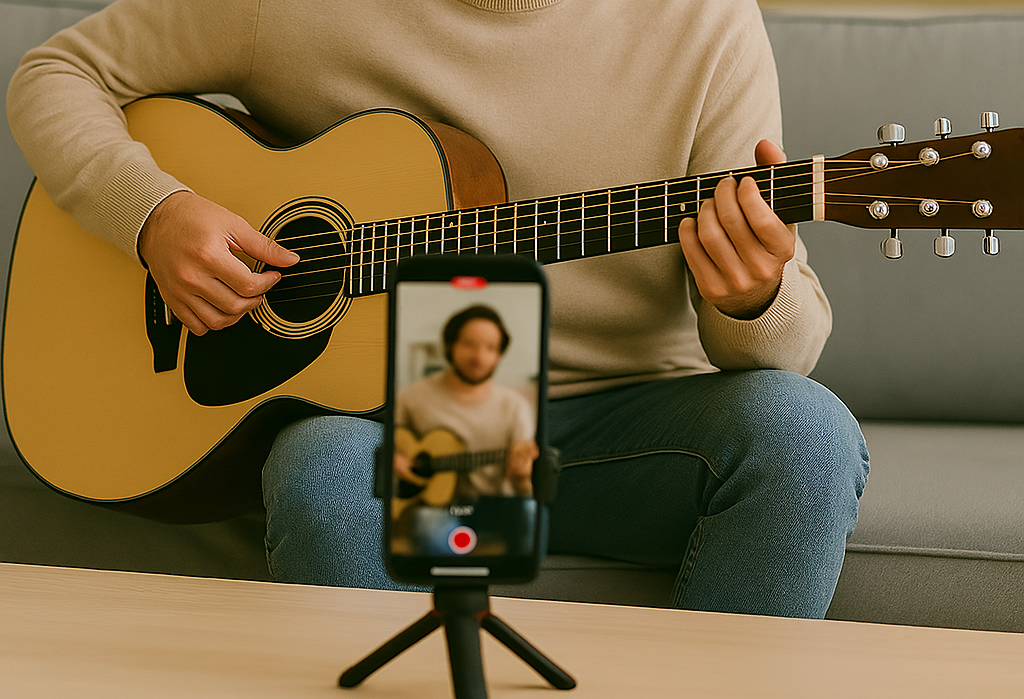
Welcome to Shortcut Culture
Here, visibility trumps merit. What’s most embarrassing is that some even called him “the new guitar hero of the decade.” Steve Vai, Joe Satriani, Jimmy Page and company would probably cringe at the comparison.
We’re gradually accepting, and often without realizing, that if someone looks and sounds good, it doesn’t really matter if they actually played it. As long as it has a beat, pastel colors, and good lighting, it’ll go viral.
Real effort isn’t sexy. It’s slow, and it doesn’t generate likes. It takes thousands of hours of mistakes, learning, and grit to compose and perform at a high level.
Milli Vanilli 2.0
Some of us remember this. Back in the ’80s, Milli Vanilli sold millions of records without singing a single note. Pure lip-syncing. When the truth came out, they were publicly shamed. Their Grammy was revoked (they had performed in playback at the awards, breaking its cardinal rule) and their careers imploded.
Today, the fraud is more subtle. More visual. Spread wider. Harder to detect but not impossible, as we’ve just seen. You don’t need a record deal. Just a phone, a DAW (*), and a sense of how to manipulate the system. Talent still exists but it’s the performance of talent that’s being rewarded.
(*) Digital Audio Workstation. It’s software used for recording, editing, mixing, and producing audio files.
The Cost: Eroded Trust
One inevitable consequence is a collective erosion of trust. People begin to question everything and everyone. A general sense of skepticism sets in. But maybe that’s not such a bad thing.
“Questioning what we consume, verifying if what we see is real, this is a sign of digital maturity. Scrutinizing creative abilities and asking whether something is genuinely played, written, or designed by the person credited isn’t just self-protection. It’s a push toward excellence.”
It reminds creators not to cut corners, pushes brands to be more responsible, and nudges audiences to demand more. Less virality, more authenticity.
Final thoughts
This isn’t about attacking one musician who made a bad call. It’s about unpacking a system that turns appearance into virtue, and builds influence from metrics rather than merit.
Maybe it’s time we demanded less visual performance and more artistic truth. Maybe we could stop watching live concerts through our phone screens, stop trying to capture the moment, and start being present in the actual experience.