In the summer of 2025, Coldplay did something no act had managed before: ten sold-out nights at the same stadium. Not ten cities. One building, ten times. It was the clearest signal yet of a shift that has quietly reshaped the top of live music: the rise of the multi-night concert residency.
A quick distinction first. “Residency” can mean two things. One is the fixed Las Vegas model, where an artist settles into a single venue for months (think Adele, or U2 at the Sphere in Las Vegas). This piece is about the other kind: the touring residency, where a tour concentrates several nights in one city instead of spreading across more of them. Same stage, same building, several nights running.
How many nights can one artist play at the same venue?
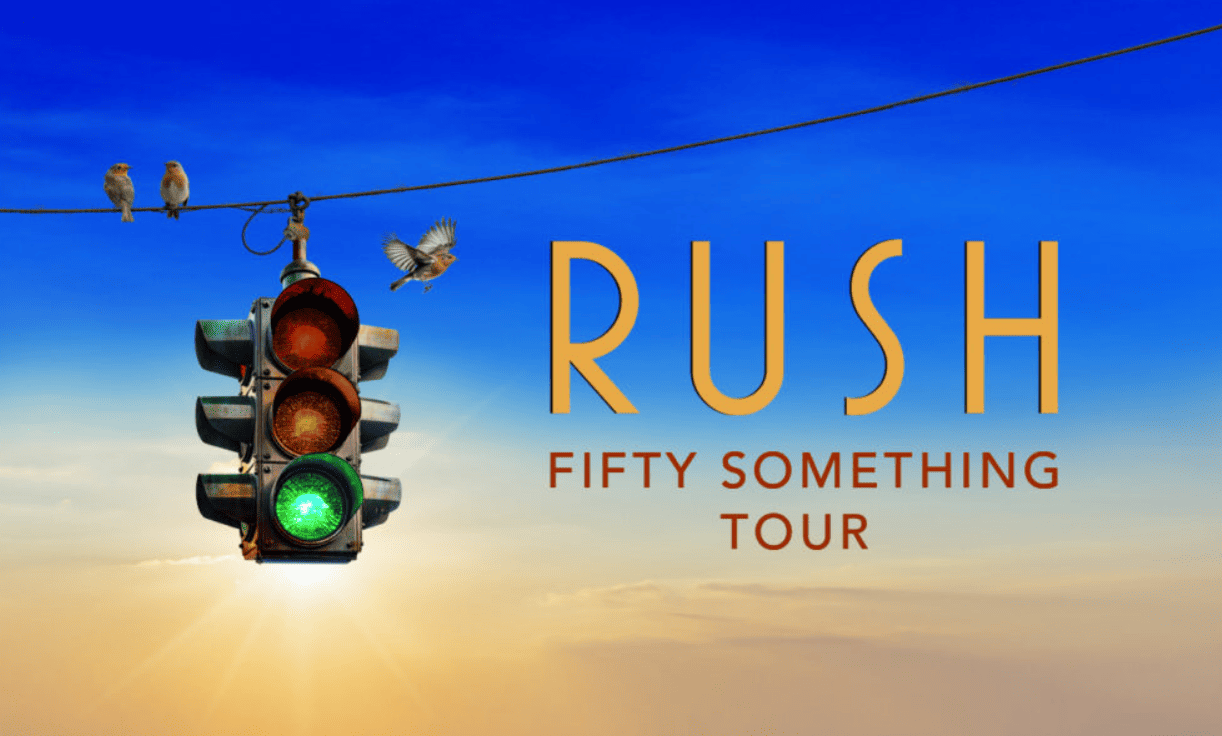
In 2025, Coldplay played a record ten nights at London’s Wembley Stadium, grossing $131.4M, the largest single-venue engagement ever for a headline artist. Multi-night residencies are now a deliberate strategy: data and demand modeling let artists concentrate dates in one city instead of touring across more of them.
| Artist | Year | Wembley nights | Milestone |
|---|---|---|---|
| Genesis | 1987 | 4 | First band to play four |
| Michael Jackson | 1988 | 7 | 504,000 attendees · Guinness record |
| Take That · Taylor Swift | 2011 · 2024 | 8 | Tied record |
| Coldplay | 2025 | 10 | First to ten ($131.4M) |
It used to happen by accident
The pattern is older than today’s mega-tours, and it has a clean lineage at one stadium. In 1987, Genesis became the first band to play four sold-out nights at Wembley (the Invisible Touch Tour, July 1 to 4), drawing 288,000 people and a Guinness record. A year later, Michael Jackson‘s 1988 Bad Tour broke it: seven sold-out nights and 504,000 people, with ticket demand topping 1.5 million. The record kept climbing. Take That and Taylor Swift later tied at eight nights, and in 2025 Coldplay became the first act to reach ten.
Back then, though, it was reactive. You learned how deep the demand ran only after the first show sold out. And the scale is worth putting in perspective: the entire Bad Tour (1987 to 1989) grossed about $125M, second only to Pink Floyd that decade, roughly $300M in today’s money (cross-decade conversions vary by method and should be read with some distance). Coldplay’s Music of the Spheres grossed $1.52B. Same business, an order of magnitude apart.
Now it’s planned
Today the multi-night run is engineered before a single ticket goes on sale. Artists and promoters lean on historical sales data, presale signals and predictive demand models to estimate, in advance, how many nights a city can absorb. Twenty-five years ago that modeling barely existed; the extra date was a guess rewarded by luck.
The spontaneity has not vanished entirely. Coldplay announced six Wembley nights and added four more after a fan presale revealed phenomenal demand. But those four sat on top of a planned base, not in place of one. Reaction now rests on a foundation of prediction.
Why concentrate the dates
At its core, concert residency economics come down to three levers: production, the venue, and demand. The logic is not only about cost, but cost is where it starts.
Production, amortized. The single biggest saving is building the show once. A stadium production travels in dozens of trucks and takes days to rig. Play it ten times in the same building and you spread that setup, trucking and crew cost across ten nights instead of ten cities. Harry Styles’ team used exactly this logic, limiting how often the stage had to be built from scratch.
The venue side. Venues typically charge a flat fee per show, paid up front, and keep concessions and fees on each night. So a residency is attractive for the building too: recurring revenue from the same asset. Whether venues discount the per-night rate for a multi-date block is not publicly documented, so treat it as a hypothesis rather than a fact. What is clear is that the promoter usually holds, and pays for, the dark days in between, when the room cannot be sold to anyone else because the production is already loaded in.
Capturing demand without diluting it. A residency lets an artist absorb a market’s full demand in one stop, rather than spreading thinner across more cities. For the biggest acts, ten nights in one city can be better business than one night in ten.
Same model, different map
Where the residency plays out depends heavily on who controls the building.
In the United States, the market is vertically integrated. Live Nation Entertainment promotes tours, owns Ticketmaster, and holds booking rights or a stake in roughly 400 venues worldwide. Promotion, ticketing, and the venue itself often sit under one roof, which makes concentrating dates structurally easier.
In Europe, the chain is fragmented. Promoter, ticketing company, and venue are usually separate actors. In Barcelona, a southern-European hub for international tours, the three major rooms (Estadi Olímpic Lluís Companys, Palau Sant Jordi, and Parc del Fòrum) are run by Barcelona de Serveis Municipals (BSM), a city-council company, not by a promoter. The residency still happens, but it is negotiated across independent parties.
The integration is now under legal fire
In April 2026, a federal jury in New York found Live Nation and Ticketmaster liable on every antitrust count, including monopolizing primary ticketing and tying their amphitheaters to concert promotion. The US Department of Justice had settled mid-trial without forcing a breakup. Its deal divested 13 amphitheater booking agreements and capped service fees at 15%, but a coalition of 33 states and Washington, DC rejected it and pressed on to the verdict. The case is now in a remedy phase, with the states pushing for a structural separation of Live Nation and Ticketmaster.
This matters for the residency. The same vertical integration that makes concentrating dates structurally easier in the US is exactly what regulators are now trying to unwind. In Europe, where promotion, ticketing, and venues sit with separate parties, that tension barely exists, or does not exist yet.
Where we are now
The result is a new normal at the very top. Coldplay‘s Music of the Spheres became the most-attended tour in history (13.1 million fans, $1.52B), anchored by that ten-night Wembley stand. Beyoncé opened her Cowboy Carter tour with five nights at SoFi Stadium in Los Angeles, grossing $55.7M, a single-venue record for a female artist. Lady Gaga built her 2025 run on the same logic, with four sold-out nights at Singapore’s National Stadium ($40.8M, 193,000 fans) and four more at London’s The O2.
The one-night stadium show has not disappeared, but for the biggest acts the question is no longer which night. It is how many.
What a residency does to Revenue Per Attendee
A residency does more than multiply the number of shows. It reshapes the economics of each fan, which is where this connects to a second metric: Revenue Per Attendee (RPA), the value a tour captures from each attendee beyond the base ticket.
Concentrating dates pulls in the multi-show superfan, the person who attends two, three, or more nights of the same run. That cuts two ways. Revenue per unique fan rises sharply, because they buy several tickets and because multi-night runs actively reward merch differentiation: tour books, dated items, and night-specific designs aimed straight at them.
But you have to separate revenue per ticket from revenue per person. The same fan across three nights inflates the attendance count, yet will not buy a new shirt or a fresh food-and-beverage round every single night.
So a residency tends to lift RPA on the layers that reward repeat attendance and dilute it on the ones tied to a single visit. And because production is amortized across nights, the cost per attendee falls, improving the margin on every fan even when gross RPA holds steady.
The residency is the volume lever; RPA is the depth lever.
Read together, they explain why ten nights in one city can out-earn a ten-city tour, not only on logistics but on the quality of revenue per fan.
Put the model to work
These records are the visible tip. The more useful question is what concentrating dates does to the economics of a single run, and that is something you can test rather than guess.
Compare one big night against several mid-size nights, model recurring versus one-time attendees, and see how the economics shift.
Try the model →Working at the level of a single fan rather than a whole run? See the companion piece on Revenue Per Attendee.
© 2026 Oriol Guitart. This article, The Economics of the Concert Residency: Why Tours Play One Venue for Nights on End, together with the Live Event Residency Model©, has been developed by its author, Oriol Guitart. All rights reserved for the full term and scope established under Intellectual Property Law. Any total or partial reproduction, distribution, public communication and/or transformation is strictly prohibited without the author’s prior express written consent, and in any event the author must be acknowledged as such in any subsequent use.