Ecommerce is Supposed to Change. Again.
We live in a state of permanent digital hysteria. Every week on LinkedIn there’s an unspoken competition to see who can publish the most visionary prediction about “what is sure to happen” (LinkedIn just isn’t what it used to be).
Just a few months ago, the catchphrase was: “AI won’t take your job, someone who knows how to use it will.” Of course AI will replace people by taking over certain tasks, just as previous technologies have done.
“The supposed “differentiating factor” of “knowing how to use it” doesn’t hold either, because access to AI is democratizing at absurd speed: that was the point all along, never to leave it in the hands of a select few with superior skills to extract value.”
There will always be groups of people more or less skilled, but convergence starts the moment AI is perceived as a facilitator. If everyone has the same hammer, what matters is not who knows how to swing it, but who has something truly solid to build with it.
A new mantra is “AI commerce.” The umpteenth iteration of the same discourse: “Now, finally, digital commerce is going to change forever.” Will it? Let’s take a breath and put it in perspective.
What is AI commerce (agentic commerce)?
It’s the next step after ecommerce: instead of clicking through checkout yourself, an AI agent discovers, compares and buys for you. This “agentic commerce” extends two decades of cutting friction, from marketplaces to mobile, social and search commerce. The open question isn’t the technology, but whether buyers will trust an agent to spend their money.
Ecommerce has always had one goal: to grow by eliminating friction
Everything that has happened in the last twenty years of digital commerce can be summarized in one idea: sell more with less effort from the user, and increase the channel’s share (except for ‘pure players’). Companies don’t live by incremental sales alone: the goal was to grow a channel’s share at lower structural costs than physical retail.
Ecommerce has always aimed to become “everywhere & anytime commerce”: buy wherever, whenever, however. Looking at it through the lens of the seven deadly sins, AI clearly impacts one in particular: sloth.
Key Stages in the Evolution of Ecommerce
1. Marketplaces: Digital Shopping Becomes Routine
Amazon, Alibaba, and the like didn’t invent ecommerce. They made it habitual. Endless product availability, trust in the process, flawless logistics, elimination of friction and minimization of barriers wherever possible (payments, exchanges, returns…), and the perception that buying online is easier than doing it offline. That was the real shift.
2. M-commerce: The Mobile Device as the Funnel’s Center of Gravity
When smartphones arrived, the industry went into panic mode, fearing, as it ultimately happened, that a significant share of user time would shift from computers to mobile devices. PCs remained relevant for work and productivity tasks, but lost prominence in everyday digital consumption.
How do we get someone to buy on a screen barely 4.5 inches? Initially, they just “ported the website to mobile,” but the real revolution came with apps, which integrated shopping into a complete, continuous journey:
Inspiration → browsing → purchase → post-purchase → advocacy on social media
If inspiration already existed on mobile, everything had to happen without leaving the device. The phone stopped being a channel and became the place where everything was meant to happen.

3. Social Commerce: From Discovery to Checkout… in Theory
Instagram and TikTok, born as inspiration channels, rushed to integrate native catalogs and payments. The problem: mobile screens are still small, and no feed can display a full catalog. Too many clicks, too much friction. The feed becomes a sample, showing only a curated selection.
From there, interesting spin-offs emerged, such as Live Shopping (which I analyzed in depth in this ESIC article). Inspired by Asia, it combined streaming + ecommerce + presenter/influencer to drive impulse purchases in real time.
Extremely popular in countries like China, where it functions as a hybrid between “TV shopping 3.0” and a fandom concert; in the West, results have been sporadic at best, and it hasn’t gone beyond an experiment. An attempt to turn entertainment into instant checkout.
4. Voice Commerce: An Unmitigated Failure
Alexa was supposed to be the new shopping channel. In reality, it was used for routine actions (“play music,” “turn on the lights”), and attempts to turn it into a shopping vehicle (“Alexa, buy milk”) went nowhere.
“In the realm of voice commerce (v-commerce), the absence of a visual interface meant that beyond routine or replenishment purchases, repeated and exploratory use proved impossible.”
An unmitigated failure, acknowledged by Amazon with measurable data.
5. Search Commerce: The Buyer is Already an Algorithm
Today, Google shows an AI-generated answer (Gemini) before any SEO result or ad. The search engine no longer delivers information: it gives recommendations directly. Whether this will work in the long term remains to be seen, but half of LinkedIn is already lecturing on it.
“AI Commerce”: Agents That Buy for You
The next level is clear: don’t search (or “find”), don’t filter, don’t compare, don’t decide (or reduce the choice to just a few options). Delegate.
A clear example: Lady Gaga concert tickets. Instead of spending two hours in a virtual queue and ending up with nothing, you send your AI agent to fight for you. Efficient? Yes.
The Delegation Threshold©: Four Variables That Decide Where an Agent Can Buy for You
But this example highlights four key, highly specific variables that prevent generalization:
- Scarcity (few units, high demand)
- Urgency (purchase must happen now)
- Effort, referring to the time and attention the buyer must invest to obtain the product
- Predictability of the delivered product. Let’s remember that in this case, the delivered product is an experience (the show itself), to which layers of value are added: from where (seat location) and how (standard, VIP) we will enjoy it. The ticket simply unlocks access
Effort is what creates the desire to delegate. Predictability is what decides whether the buyer goes through with it. Scarcity and urgency only decide whether automating is worth doing now or can wait..
Applied to specific categories, the four variables give an answer for each one.
| Category | Scarcity | Urgency | Effort | Predictability | Where it lands |
|---|---|---|---|---|---|
| High-demand concert tickets | High | High | High | High | The clearest case |
| Household replenishment | None | Low | High | Very high | Already happening |
| A flight, fixed route and date | Medium | Medium | High | High | Works today |
| A wine you have never tried | Low | Low | Medium | Low | Shortlist only |
| Clothing | Low | Low | Medium | Low | Shortlist only |
| Insurance | None | Low | Very high | Low | The hard case |
| Medical treatment | n/a | Varies | High | Low | Outside the frame |
The ratings are directional, not measurements. They describe how a category behaves on each variable, which is what decides whether delegation is plausible. They say nothing about the size of the category or how soon it will move.
Two rows deserve attention.
Household replenishment is the least glamorous case and the one that works best. Nobody writes visionary posts about buying the same detergent again, yet it scores high on effort and almost perfectly on predictability. Agentic commerce will end up looking far more like a reorder than like a Lady Gaga ticket.
Insurance is the opposite, and it is where the accountability question bites hardest. The effort of comparing policies is enormous, which is exactly what makes delegation attractive. But the product is a promise whose real quality is discovered at claim time, years later. An agent can pick the cheapest policy that matches the stated constraints. Nobody wants to find out, in the middle of a claim, that the constraints were stated badly.
Buying access to an event is one thing; buying wine, medical treatment, or insurance is another. In these cases, scarcity and urgency are very different, and predictability varies. Will we accept what a machine decides, or will we need to validate it ourselves to feel we made the decision?
One Year Later: Two Protocols and the Problem They Solve
When this article was published, agentic commerce was still a claim. It is now infrastructure, and what that infrastructure is built to do is more revealing than any forecast.
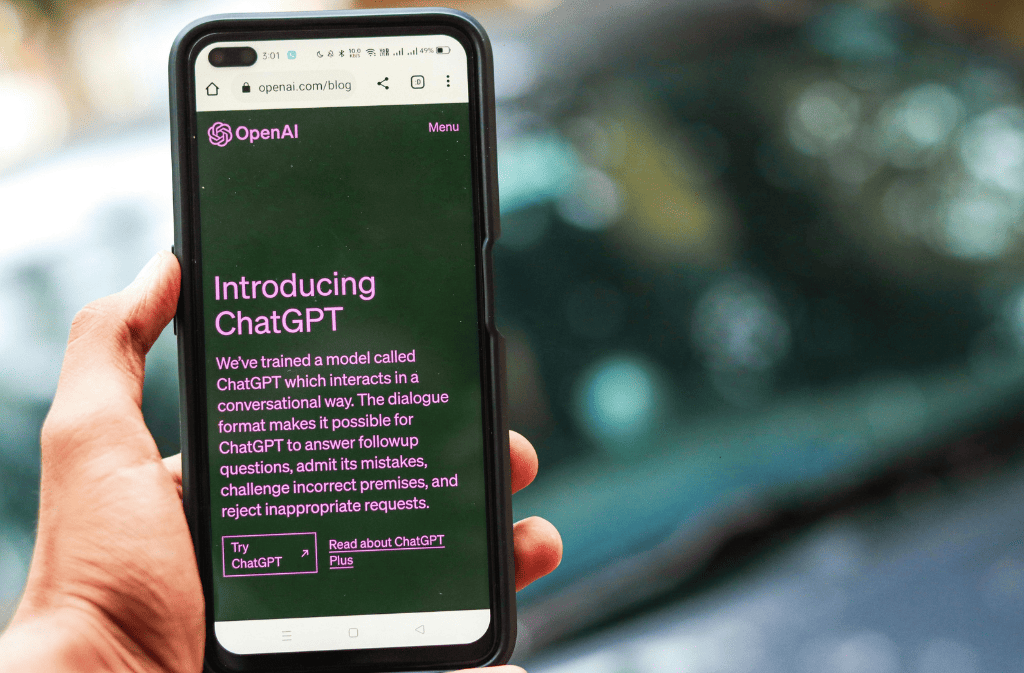
Two competing stacks are being built. Stripe and OpenAI released the Agentic Commerce Protocol, an open standard under Apache 2.0, with ChatGPT as the first platform to implement it and Stripe as the first compatible payment provider. Its core mechanism is a shared payment token tied to one specific merchant and one specific amount. Google released the Agent Payments Protocol, whose standardization is now moving into the FIDO Alliance.
Read what these protocols say they exist for, because that is the revealing part.
AP2 names three gaps it is built to close. Authorization: verifying that the user actually gave permission. Authenticity: confirming that the agent’s request reflects what the user really wanted. Accountability: establishing who is responsible when a transaction goes wrong. Its anchoring idea is that trust in payments has to rest on deterministic, non-repudiable proof of intent.
All of it is about proving who wanted what, and who pays when the answer turns out to be wrong.
The technology was never the hard part, and the protocols are the industry’s admission of it.
Technology or Trust?
Today, a large and growing share of online content is generated by machines. That includes most of the so-called “digital gurus” discussing these trends. They don’t even write their own posts.
You can tell: identical structure, neutral tone, ending with a question like “What do you think?” followed by “I’ll read your comments.” Otherwise, it would seem rude and confirm there was no real intent to spark discussion. In the public square, there were already people on cardboard boxes shouting ideas and concepts (in the Wild West, they were miracle potions) without expecting much audience feedback.
AI will integrate into digital commerce. That has already happened. The dilemma will arise when we start questioning its credibility, considering that not all product categories have the same peculiarities in the full purchase process, which we know is not just “going through checkout.”
Not Everyone Shops the Same: Ecommerce Will Have to Coexist in Multiple Models
Digital commerce has always been a battle against friction. It started by removing barriers (free returns were one driver), but in eliminating friction, we risk losing judgment as well.
Last but not least: can we create ecommerce solutions tailored to different generational profiles?
Boomers, Gen X, Z, Millennials… each has a distinct process and mindset in their purchase decisions, or at least specific peculiarities. And beware of ignoring the “dynamic view”: patterns shift and slide even within the same generation.
What to Check in Your Own Category
Place your own category on the two variables that matter most, effort and predictability, and the implications follow on their own.
If effort is high and predictability is high, agents are coming to your category whether or not you are ready for them. The work becomes legibility: structured data, stable identifiers, a catalog a machine can parse without guessing, and inventory and pricing that can be read in real time.
If predictability is low, the agent moves upstream, into discovery and shortlisting, and the problem becomes making the shortlist rather than owning the checkout.
And in both cases there is the question the protocols are busy trying to answer. When an agent buys the wrong thing, who absorbs it. If your returns, disputes and customer service policies still assume that a human clicked the button, they do not cover this yet.
© 2026 Oriol Guitart. The Delegation Threshold© has been developed by its author, Oriol Guitart. All rights reserved, for the duration and extent established by the applicable intellectual property law. Any reproduction, distribution, public communication and/or transformation, in whole or in part, is strictly prohibited without the author’s express written authorization, and the author must in any case be credited as such in any subsequent use.