The 4 Vectors of

The 4 Vectors of Execution©

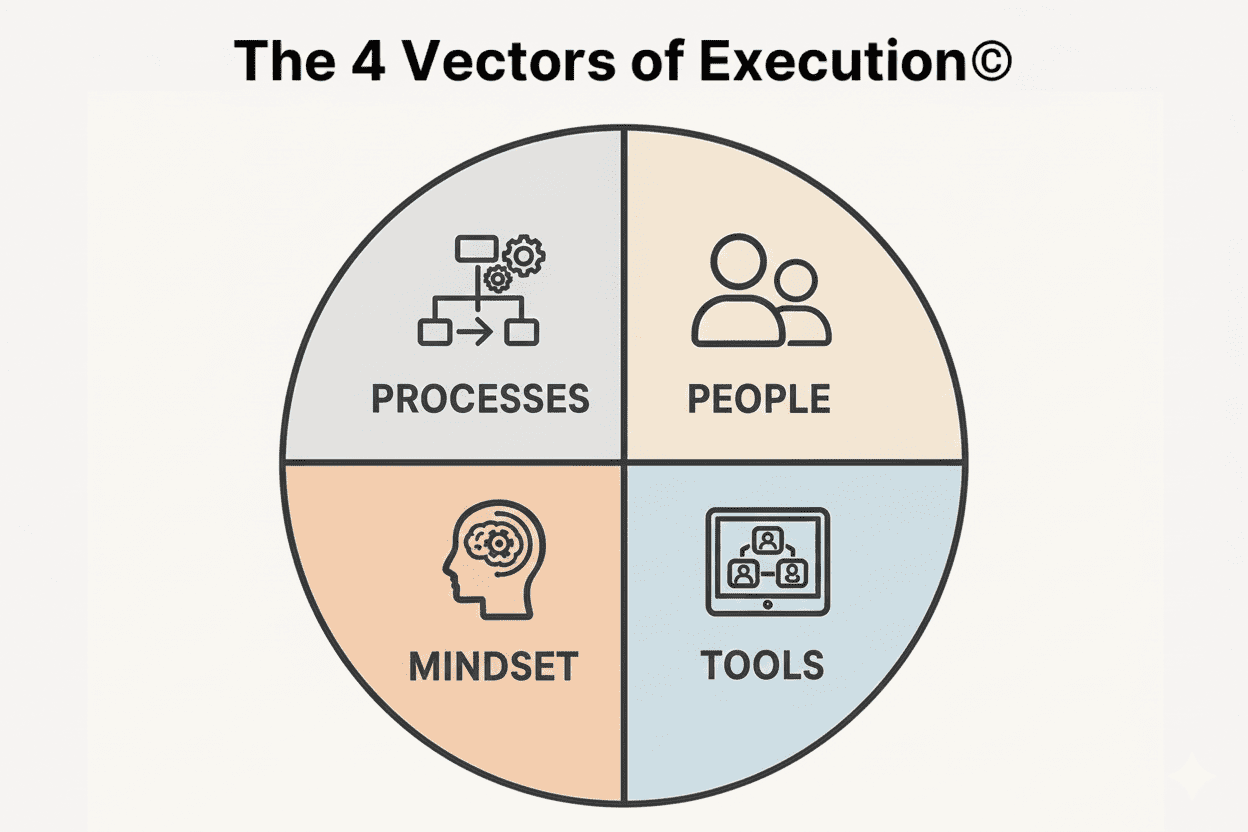
Moving from strategy to execution is not a problem of ideas or planning, but of alignment. Execution only works when four inseparable vectors come together: clear processes, capable people, sufficient tools and resources, and the right mindset. The absence of any one of them can block or sabotage even the best strategy. Execution is not about demanding more effort, but about creating organizational coherence.

Networking y los Circulos Concentricos de Valor

Networking and the Concentric Circles of Value

In a professional network, what matters is not the number of contacts but how relationships are structured and evolve. The concentric circles of value reveal different levels of trust and contribution: from the intimate core, where true relational capital resides, to the general network, which provides reach and potential. It is a dynamic system that strengthens with intention and weakens when taken for granted.

Learning by Doing como desarrollar talento en entornos corporativos

Learning by Doing: How to Develop Talent in Corporate Environments

Project-based learning bridges theory and practice, energizing teams and building critical skills. In companies and business schools alike, “learning by doing”—through cases, workshops, or bootcamps—enables participants to apply what they’ve learned to real-world challenges, generating tangible value and ensuring continuity between academic training and corporate performance.

TIER Digital Framework Post 5

T.I.E.R. Digital Framework©: A Universal Model to Evaluate Any Website or App

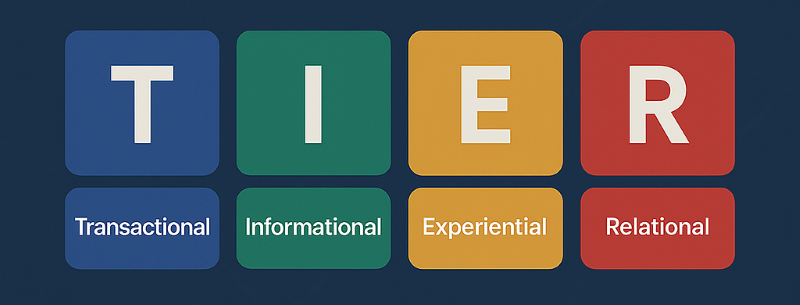
The T.I.E.R. Digital Framework© is a universal model to analyze any website or app through four essential layers: Transactional, Informational, Experiential, and Relational. While the weight of each layer varies by purpose, all are always present. This model helps validate whether a digital platform is truly serving its intended goals by revealing imbalances, guiding improvements, and aligning design with strategy.
Let’s take a closer look…

Product Led Growth Blogpost

Product-Led Growth: Is There Life Beyond SaaS?

Product-Led Growth (PLG) has transformed SaaS by making the product itself the engine of growth. But is this model exclusive to software? While applying it outside the digital space comes with challenges, brands like Nespresso, Tesla, and Gillette successfully implemented it long before the term even existed. The key lies in knowing when it works—and when it doesn’t. Can PLG thrive beyond SaaS? The answer isn’t obvious, but it’s more intriguing than you might think.

The Three Fundamentals of Productive Networking Post ENG Oriol Guitart

The Three Fundamentals of Productive Networking©

Networking isn’t about piling up business cards or adding connections on LinkedIn. It’s about building real, long-lasting relationships. Because when the time comes and we need an opportunity, it’s not about how many people we know—it’s about how many are willing to take action for us. And that only happens if three conditions are met, in this order: WANT, CAN, and KNOW HOW.
If any of these pieces are missing, your contact won’t be of much help. Want to understand how real ‘productive’ networking works?

Professional Inner

Professional Inner Balance: The 3 Axes Model©

I developed this model after many years dedicated to both team management and technological tools research & analysis. I found it necessary to complement the economy/technology/society approach with an inner vision of ourselves within companies and what’s expected about our performance. This model has been applied in different situations and over time, and is also valid for entry-level positions, middle management and C-level executives.

Innovation Analysis: Back & Forth Methodology

Innovation Analysis: Back & Forth Methodology©

Innovation is not just about creating something new, but about improving what already exists in order to generate, deliver, and capture value. This methodology offers a rigorous framework to understand why new solutions emerge: identifying the underlying need, how it was previously satisfied, which frictions are addressed, and which factors have enabled the new model. A framework applicable to both startups and established companies.