The Open Dilemma
“I make about 20 instruments a year; at most, I could reach 25, because I work alone. It works for me: 15 or 16 are made to order, so they’re already sold. I handle the rest myself, and they sell very quickly—so much so that I’ve had to say no to some specialty stores that wanted to distribute them. Still, I don’t make much. I could take the leap—I have a waiting list—but that would mean buying machinery and hiring someone.”
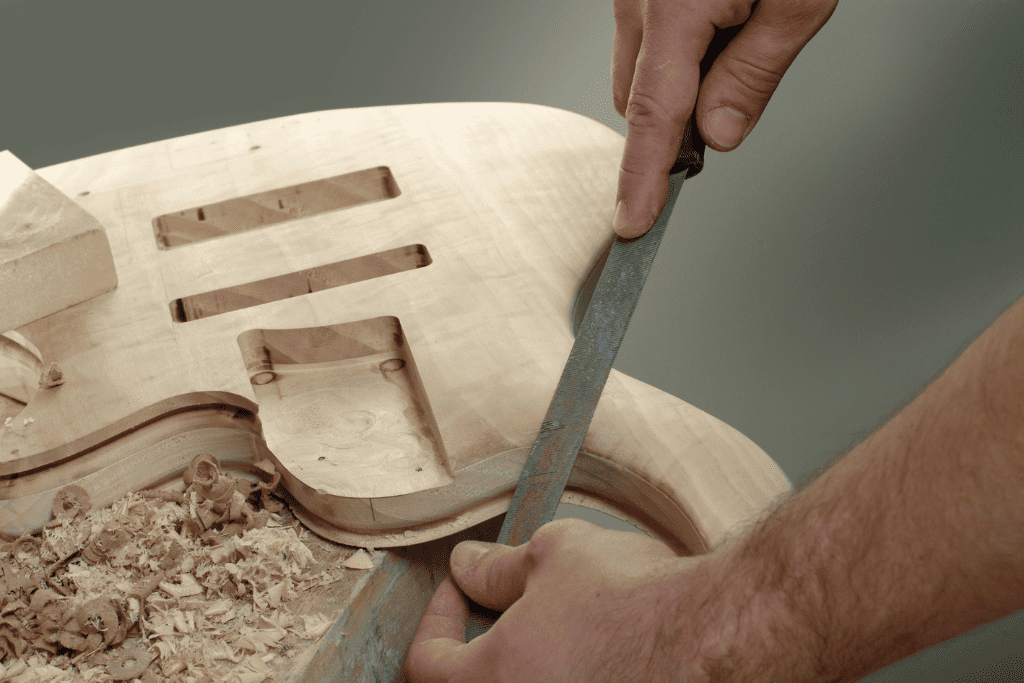
A master luthier is a craftsman who selects every piece of wood, carves the neck with millimetric precision, and adjusts each string until the instrument has its own soul. His work is excellent, and his reputation impeccable. Yet he has an insurmountable physical limit: his time.
Currently, this artisan produces 20 instruments a year. If he works weekends and stretches his days to the max, maybe he could reach 25. But that’s the limit. He can’t make more because the business depends solely on his own hands.
The “Growth Vertigo”: The Fear of Scaling
When this artisan sees that the market demands 100 instruments, what we call “growth vertigo” appears. Scaling means buying machinery, hiring assistants, and taking on higher fixed costs.
Then comes the paralyzing doubt: “If I invest and make 100, will I be able to sell them?” This fear keeps many brilliant businesses trapped in self-exploitation. To overcome it, one must stop being just a craftsman and become a 360°-vision manager. A difficult transition, but not impossible.
360° Vision: The Pillars of a Corporate Structure
For a workshop to become a company, working harder is not enough. A professional structure divided into functional areas is required.
1. Operations: Documenting the Know-How (SOPs)
One of the expert’s biggest concerns is: “No one will do it as well as I do.” The only way to break this barrier is through SOPs (Standard Operating Procedures).
- Don’t delegate the master touch, but delegate documented processes (how to cut, sand, and varnish).
- By safeguarding the process, results become predictable, and the owner can stop “doing” and start “supervising.”
2. Marketing: Generating Constant Demand
In artisanal models, marketing is usually word-of-mouth. In a scalable company, marketing is the engine that must keep the workshop running.
- Event Presence: Attend international fairs and industry events to gain global authority.
- Digital Assets: Develop a website that functions as a full marketing and sales funnel (including an e-commerce or “order intake” component, should we decide to manage distribution through to the end consumer), supported by a social media strategy that amplifies the brand’s narrative and overall impact.
- Sponsorships: Collaborate with artists or influencers to gain traction and prestige.
3. Sales: Professionalizing Commercialization
Making is one thing; selling at scale is another. Here, commercial work must be professionalized to ensure production has an outlet:
- Distribution Channels: Decide between direct-to-consumer (D2C), agreements with specialty stores (indirect), or hybrid models.
- Sell-In Strategy: Learn to manage distributor inventory, handle orders, commercial conditions, and volume-based incentives.
4. Finance: Controlling Risk
When volume increases, managing money becomes critical.
- Cash Flow: Buying raw materials for 100 units before collecting payment requires financial breathing room and careful tax planning.
- Asset Investment: Machinery purchases and warehouse rentals turn variable costs into fixed costs, requiring strict control of the break-even point.
5. HR and Leadership: Training to Delegate
The luthier must now learn to manage people. He needs to hire assistants for low-value tasks and administrative support. The challenge is transmitting a culture of excellence so that quality doesn’t dilute as the business grows.
6. Administrative Support: Outsourcing to Move Forward
As the company grows, bureaucracy increases (contracts, trademarks, logistics, warranties). Outsourcing these tasks to specialists is vital so the CEO isn’t buried in paperwork and can focus on strategy.
From Craftsman to Manager
The step from an artisanal model to a scalable one isn’t just about increasing production; it’s an organizational metamorphosis. To grow, the craftsman must make space for the manager. The ability to let go is key to growth.
Welcome to the corporate structure.